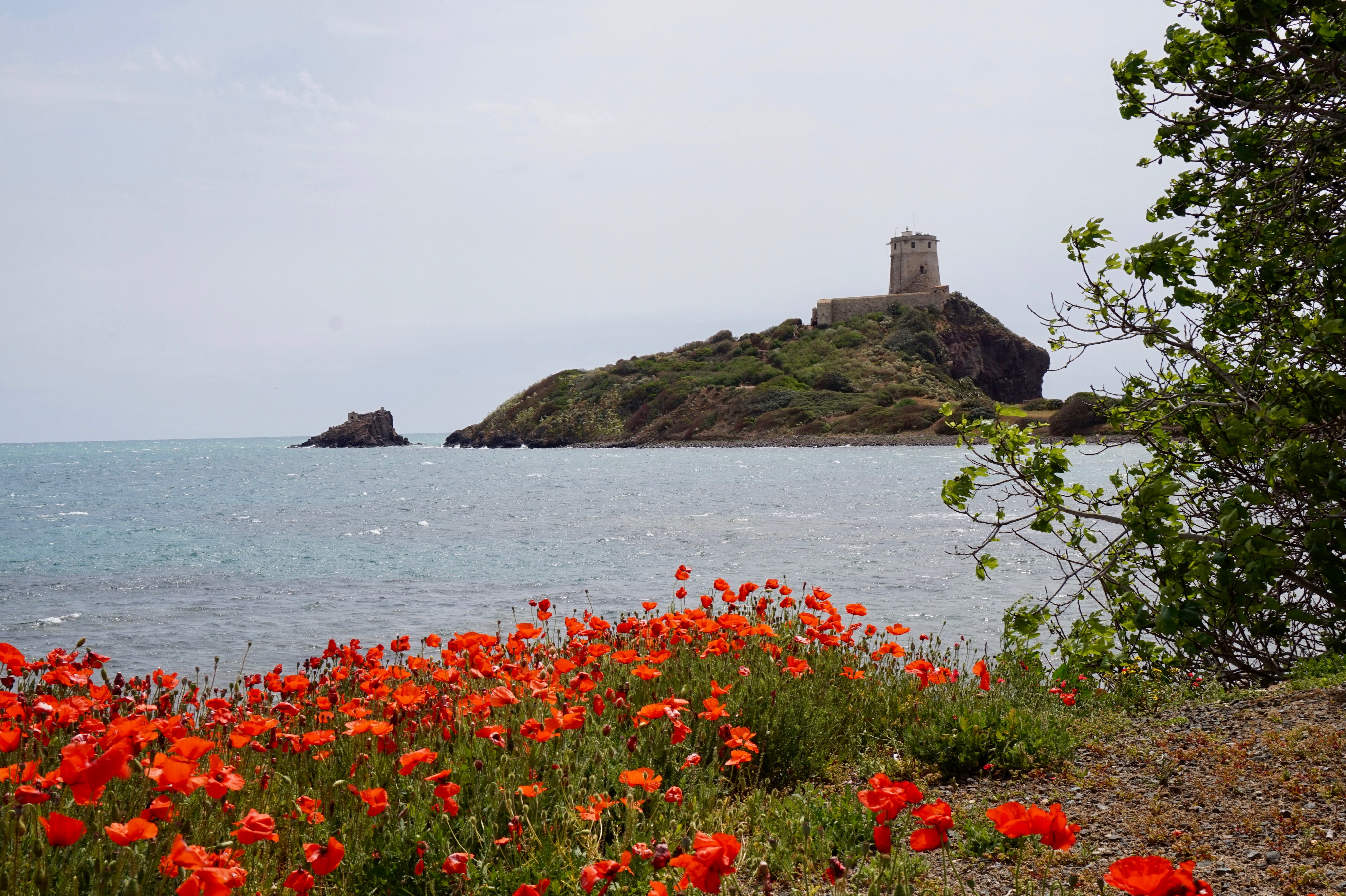
When we booked our trip to Cagliari, Riccardo and I encountered a few funny looks. While the glittering ports and high-end resorts of northern Sardinia have long attracted the rich, famous and jet-set, the southern capital hasn’t traditionally been considered a tourist destination — least of all by Italians. A Neapolitan friend’s story speaks volumes: while serving in the military, her unflappable father asked to be posted to the ugliest* part of Italy. He was sent to Cagliari. But that was years ago.
(In Italy, ‘ugly’ always requires an asterisk. True, there is a brutalist eyesore for every grand palazzo, many in an alarming state of disrepair. But the stunning natural surroundings, combined with the golden Mediterranean light, have a way of making even the ugly parts of Italy look only as bad as a has-been supermodel after a few rough nights.)
Flash forward to the present, and Cagliari still isn’t Italy’s most picturesque town. While direct international flights have increased in recent years and cruise ships are mainstays in the harbor, many tourists still bypass the city in favor of the southern coastal resorts. Upon arrival from London, I admit that I briefly wondered whether we should have done the same: although Cagliari boasts a charming historic center surrounding a brooding medieval fortress, run-down modern buildings dominate the cityscape and the port is very much a working one.
But it didn’t take long for Cagliari to grow on us. Beneath the grit and graffiti, we quickly discovered a vibrant cultural heart, pulsating with pride in the city’s ancient past, as well as a lively, contemporary beat that bodes well for its future. Five days and a spectacular festival later, we came to see Cagliari not only as a convenient jumping-off point for exploring southern Sardinia, but also as a delightful (and delicious) place to come back to at the end of a full day.
Following are some observations and highlights from our four-night trip. Having spent our nights in Cagliari and our days mostly exploring the south coast, we are by no means experts, but the taster we experienced left us eager to come back — hopefully before everyone else discovers this beautifully unpolished gem of a destination:
Bronze-Age history meets 21st-century hip
Italy is a playground for history buffs, and Cagliari is no exception. With civilization dating back to the Bronze Age, the city was officially founded as Krly by Phoenicians in the 8th century BC and subsequently occupied by Carthaginians, Romans, Pisans and Catalans. Each of these conquerors left legacies that today can not only be seen, in the form of ruins, artefacts and traditional dress and handicrafts, but also heard in the Sardinian language, which contains traces of Latin, Arabic, Catalan and Spanish.
Architecturally, Cagliari’s crown jewels are its honey-toned medieval walls and the newly restored Bastione di San Remy, with its grand staircase, elegant plaza and sweeping views of the city. Several churches in the old city are also worth a visit, including Cattedrale di Santa Maria Asunta (don’t miss its ornate crypt, which houses relics of Cagliari’s martyrs), and Sant’ Eulalia, which includes an underground archeological site and museum dating back to pre-Roman times.
Otherwise, the city’s historic sites, though numerous, are fairly modest by comparison to other Italian hotspots and many are down at heel. Even the graceful galleries and grand villas of the portside Via Roma are occasionally punctuated by shabby, concrete edifices — a reminder of the heavy shelling that Cagliari endured during the Second World War.
Still, what Sardinia’s capital may lack in post-card perfection, it makes up for with a seamless melding of old and new, as well as an authenticity and “cool factor” that are hard to come by in Italy’s more established destinations. Stylishly decorated cafes, bars, restaurants and even nightclubs are built into rough-hewn stone caverns — near Bastione di San Remy, we enjoyed many a strong espresso on the sunny terrace of Caffè de Candia. Meanwhile, the town beach, called Poetto, buzzed with locals even on a cool, late-April day and was refreshingly free of the private clubs, loungers and changing cabins that clutter so many Italian beaches.
Michelin-star cuisine at moderate prices
Further proof of Cagliari’s embrace of old and new comes in the delectable form of its cuisine. We kicked off and concluded our trip with rustic Sardinian fare at La Pirata, where we enjoyed such traditional dishes as saffron-hued seafood risotto, mouthwateringly pungent spaghetti with bottarga (salted and cured fish roe), and a starter of melted pecorino on carasau (traditional crispbread) that I like to think of as Sardinian nachos.
But having a proud culinary heritage hasn’t stopped a new crop of Sardinian chefs from shaking things up — and the results are glorious. In the Marina district, celebrity chef Luigi Pomata concocts creative twists on traditional favorites in a modern, friendly setting. Known as the “Tuna King,” he is also credited with introducing raw fish to Sardinia’s gastronomic scene: his signature dish — red tuna tartare on buffalo mozzarella cream with micro cress and caviar — was one of the sexiest dishes I’ve ever tasted.
Just up the street, the celebrated Dal Corsaro may look a bit stuffy and old-fashioned on the inside, but the cuisine is anything but. At the helm of his family’s generations-old restaurant, 35-year-old Stefano Deidda — who earned the restaurant its first Michelin star last year — combines local and seasonal ingredients in ways that are nothing short of alchemic. For example, I didn’t know it was possible to improve on a fresh, raw oyster, but his placement of the oyster in a bath of silky cauliflower purée managed to do just that.
Last, but definitely not least, the Michelin-starred S’Apposentu, meaning ‘living room’ in Sardo, is more than worth the one-hour drive inland to the idyllic region of Marmilla. Having earned his reputation in Cagliari, chef Roberto Petza opened S’Apposentu and a new cooking academy in a bid to revitalize the small village of Siddi, which suffered a precipitous decline in population following the closure of a large pasta factory.
With an emphasis on sustainability and local ingredients — many of them sourced from the onsite farm — Petza and his team dish out a feast for all the senses in stunning, pastoral surroundings. The opportunity to meet Petza, who couldn’t have been humbler or more gracious, brought our destination lunch to an especially sweet finish.
My partner Riccardo, who was born and raised in Italy but has now lived almost half his life abroad, repeatedly remarked that Cagliari “has so much potential” — a comment he often makes when he goes back to his home country. But whereas his tone is somewhat wistful when he says this of, say, the overdeveloped coast of his native Liguria, there was a clear excitement in his voice in Cagliari. What he noticed — and what I also appreciated, as a frequent visitor to Italy — was a city that was restoring and reinventing itself, and not just resting in its touristic laurels. Based on the lively energy and many works underway, we are confident that our next visit will be even better.
 THE JAUNT