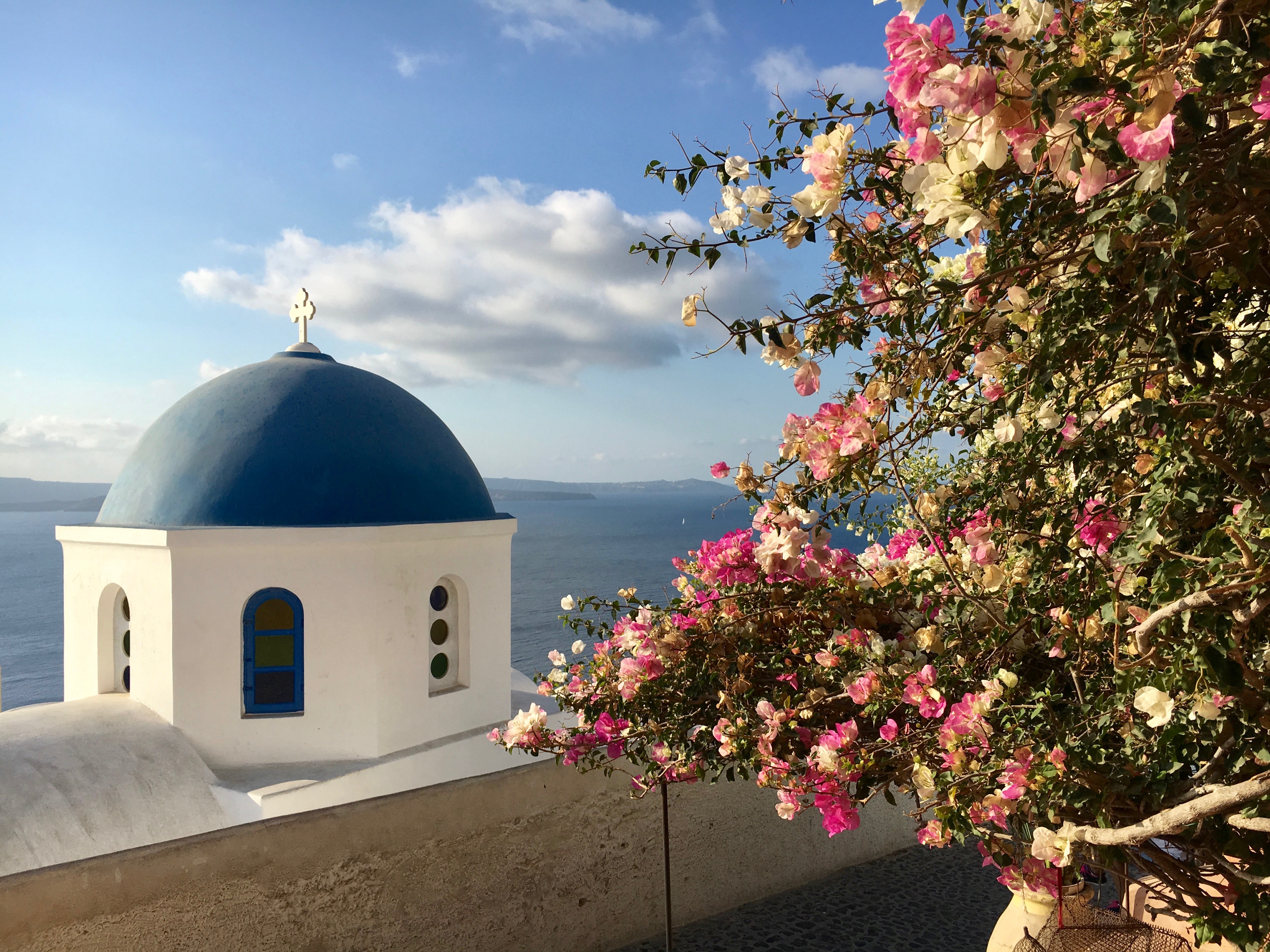
Some 3,500 years ago, the Greek isle of Santorini was transfigured by one of the biggest volcanic eruptions of all time. So powerful was the blast that it caused one side of the volcano to collapse into its own crater under the sea (potentially laying waste to legendary Atlantis in the process). On the plus side, it also created Santorini’s world-famous caldera, one of Greece’s most spectacular natural wonders.
Today, Santorini is experiencing another explosion — but the culprit this time is tourism. Like the blast of antiquity, this modern-day eruption has had its pros and cons. On the plus side, tourism — which accounts for 90% of Santorini’s economy — has helped put Greece on a path to recovery from its crippling debt crisis, without the austere terms of bailout loans.
The growth of the industry has also been good for tourists. More commercial flights, ferries and cruises have also made it easier for people like my husband and me to visit this bucket-list destination. In 2018, Santorini welcomed a record-breaking 2 million visitors, up from the previous record of 1.7 million the year before. Factor in the cruise passengers, and the number swells to around 2.5 million.
With tourism on the rise throughout Greece, it’s easy to see why Santorini still gets the lion’s share: there truly are no words (but no shortage of Instagram hashtags) to describe the thrill of a flaming Aegean sunset, framed by a cliffside cascade of white houses and blue domes. Cultural and natural treasures abound, giving the island appeal far beyond the sun-and-sand set. There’s also great food and wine to be had and Greek hospitality is second to none.
However, it’s also easy to see that this boom has come at a cost — and I’m not just talking about hotel rooms that can set you back €5,000 a night. Driven by the growth of tourism, the year-round population has almost doubled over the last decade. This, combined with the sheer number and concentration of tourists, has increased pressure on the environment, natural resources, public services and infrastructure. Intensive development threatens the island’s character without promising any solutions to its problems. And most concerning of all, longtime locals are struggling to stay afloat amid soaring prices and unaffordable rents.
Santorini certainly isn’t the first place to face the challenges of ‘overtourism’ and it won’t be the last. But its tiny size, extraordinary beauty and rich cultural heritage have a way of putting these pressures under a microscope, highlighting the urgent need to preserve these places for locals and visitors alike.
Encouragingly, a number of new rules and initiatives are in place to make Santorini tourism more sustainable, including a daily limit on the number of cruise visitors and a campaign to promote tourism outside the packed summer months. The municipality is also working with Athens to limit new building permits and has a number of sustainable tourism projects underway.
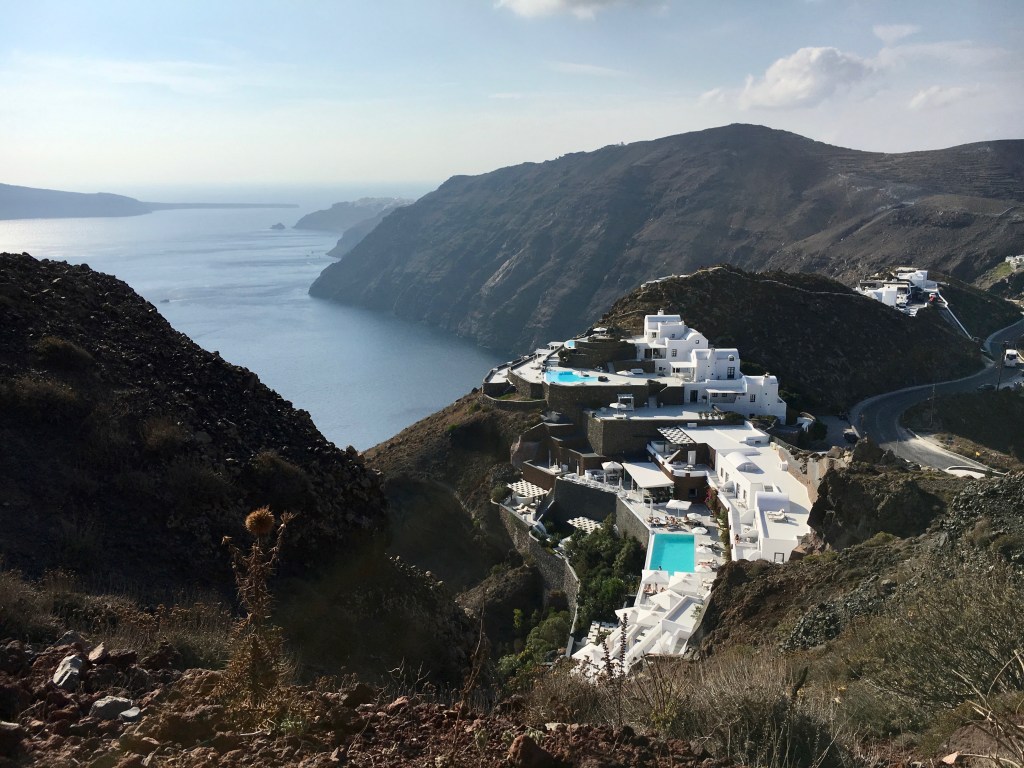
However, there are also things we can do, as tourists, to lighten our footprint when we visit. If you’re planning a trip to this enchanted Greek isle (and it really is worth it), here are nine things to keep in mind for visitors who want to fully enjoy this special place while helping to keep it special:
- Go in the off-season. Thanks to recent efforts to make Santorini a year-round destination, the island has more and more to offer the off-season visitor. You’ll enjoy lower prices and lighter crowds, all while helping to relieve peak-season pressure and spread the benefits of tourism throughout the year. Go in the spring before mid June or in the autumn after mid September to enjoy warm, dry weather and far lighter crowds. From November through April, temperatures are cooler but there’s still plenty of sunshine, leaving days open for hikes, wine tastings, archaeological visits and more.
- Hire local tour guides. Until recently, cruise operators deposited up to 20,000 visitors a day on the island (new caps limit the number to 8,000), capitalizing big-time on the Santorini “brand” without sharing any of the profits. Tourism takes a heavy toll on things like roads, ports, bus systems and waste disposal, so help reinvest in Santorini by hiring local tour companies instead. You’ll benefit from insider knowledge and smaller group sizes, all while supporting the local community.
- Don’t rent a car. Increased tourism has brought epic traffic jams to the tiny island. Fortunately, all of Santorini’s towns and major attractions are served by the KTEL public bus system. With a network of stunning walking trails throughout the island (I highly recommend the long, but relatively easy walk from Fira to Oia), Santorini is also a a great destination to explore on foot.
- Stay in a family-run hotel . When it comes to sustainability, lodgings are tricky. The Economist reports that holiday home rentals like Airbnb have pushed up rents so high in Santorini that employers have resorted to buying land to build new housing for their staff. While traditional hotels have their own problems (including overdevelopment pressures from new hotel properties), try staying at a small, family-run hotel to minimize your footprint while helping to keep your tourist dollars in local pockets.
- Visit (and stay in) less touristic parts of town. There’s more to Santorini than Oia and the main town of Fira. Along the caldera, Firostefani and Imerovigli are every bit as Instagram-worthy and offer spectacular sunset views. The inland villages of Pyrgos, Messaria, Emporio, Exo Gonia, Katherados, Vothonas and Megalochori also charm with narrow lames, blue-domed churches, colorful houses and cafe-dotted squares.
- Save water and energy. Increased tourism has caused water and energy consumption to skyrocket, with water consumption increasing 46% in recent years. Help the island conserve its resources by being mindful of your water and energy use when showering and using lights, heat and AC.
- Don’t ride the donkeys. Human locals aren’t the only ones feeling the pressure from the tourist boom: the famous donkeys are suffering, too. Although they are a traditional mode of transport on the island and have been used for decades to bring visitors from the port up the steep ascent to Fira, The Guardian reports that the increased volume (and weight) of their cargo has led to spinal injuries, saddle sores and exhaustion. The newly launched ‘In Our Hooves’ campaign, sponsored by activists and the cruise-line industry, aims to sensitize visitors to the stress placed on these animals, so help set a good example by passing on the donkey rides and taking the cable car or a bus instead.
- Support local agriculture. Thanks to its mild climate, volcanic soil and ancient agricultural traditions, Santorini is home to unique produce and products, including rare fruits, vegetables, wines, cheeses and honey. However, many farms have closed in recent years due to rising costs of living and the higher margins to be made by using or selling the land for hotel development. Help support local agriculture by visiting wineries, buying local produce, taking cooking classes and eating at restaurants that emphasize local ingredients (like Oia Vineyart, which was so good we ate there twice).
- Go somewhere else. Santorini’s lure and luxury have become all the more famous in the Instagram era, but there are plenty of other Greek islands that are just as beautiful and, at least for the time being, not completely overrun by tourists. We loved our late September visit to Crete; though hardly undiscovered, Crete is much larger and therefore can better absorb and diffuse tourists. But next time the Greek islands call my name, I’ll be tempted to explore the Small Cyclades, Tinos, Hydra or Lemnos, to name a few that have caught my eye. To learn more, check out the articles below:
10 Magical Greek Islands You Should Visit Instead of Santorini
Skip Santorini and Head to These Lesser-Known Greek Islands Instead
 THE JAUNT